Local SEO: how your website and Google Business Profile work together
A practical local SEO system connecting service pages, location information, reviews, Google Business Profile, structured data, and conversion tracking.
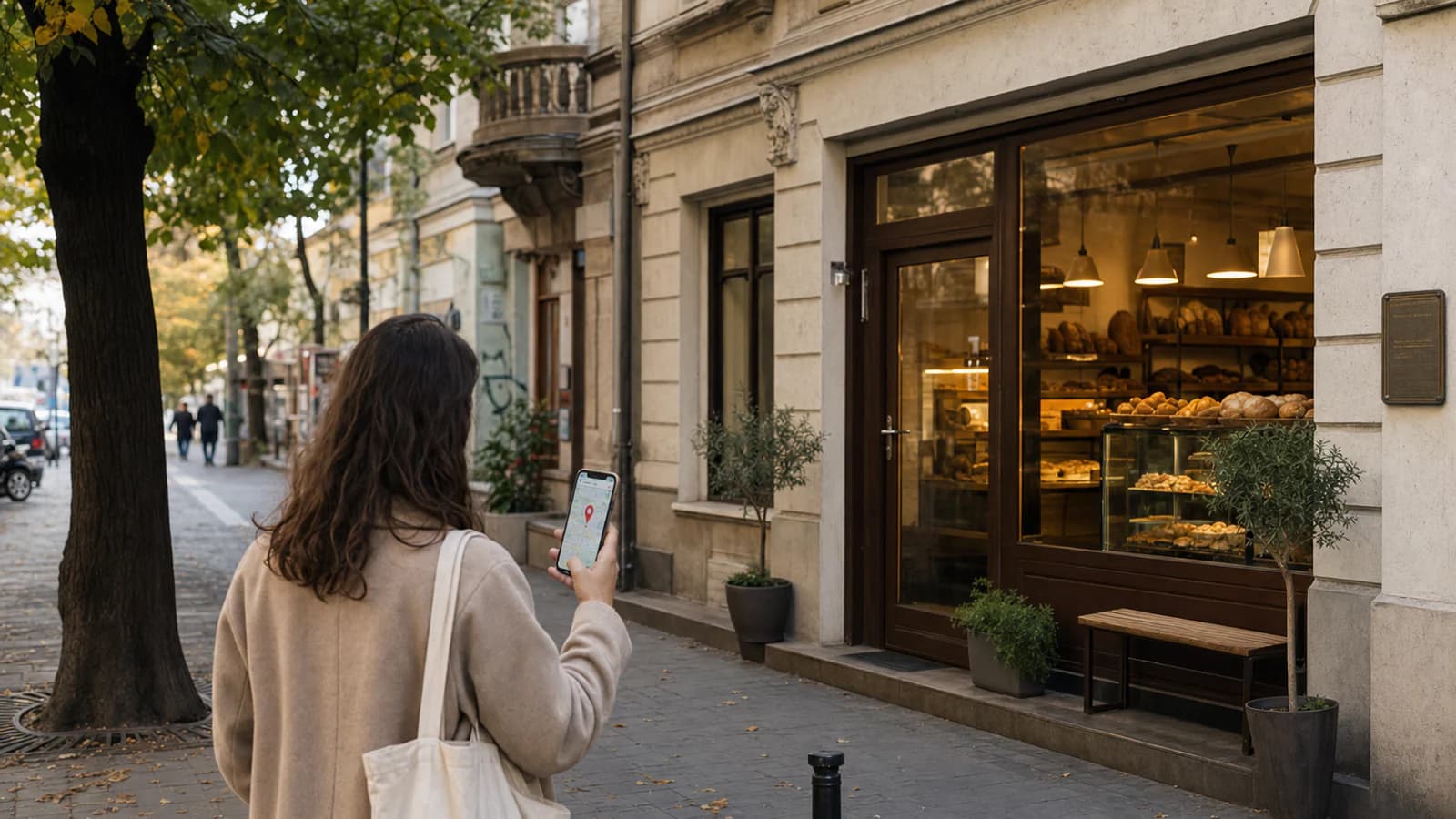
Local discovery rarely happens on one surface. A person may see a business in Google Maps, inspect its reviews, open the website, compare a service page, check the route, and then call. If the profile and website contradict each other, confidence disappears between those steps.
Local SEO is therefore not a trick performed on a contact page. It is the coordination of accurate business data, useful local pages, reputation, technical clarity, and a working conversion path.
Google describes the main local ranking factors as relevance, distance, and prominence in its Business Profile guidance. A business cannot redesign geography, but it can improve how clearly it represents what it does, where it operates, and why customers consider it credible.
Give each channel a clear role
The Google Business Profile is the fast local summary. It can show category, address or service area, hours, phone, reviews, photographs, updates, and action links. It is particularly important when a person wants to visit, call, or compare nearby options quickly.
The website is the detailed source. It explains services, process, suitability, prices or price factors, team, policies, proof, and next steps. It provides stable pages that search engines and customers can reference directly.
The profile should lead to the best website answer. The website should confirm the profile’s facts and provide the depth that the listing cannot hold.
Establish one approved business record
Create a source of truth for:
- public business name;
- primary category and relevant secondary categories;
- address or service area;
- map pin and entrance details;
- phone number and email;
- normal and special hours;
- website and booking URLs;
- services and attributes;
- short business description;
- social profiles.
Use the same facts on the website, Business Profile, directories, reservation providers, and social accounts. Formatting can vary, but the meaning should not. An old address in one directory or different opening hours on the website create customer friction and weaken confidence in the data.
Do not add keywords to the business name unless they are part of the real-world name. Google’s representation guidelines require the profile to reflect the business accurately.
Choose categories by reality, not ambition
The primary category should describe the business’s central real-world activity. Secondary categories can cover meaningful additional services, but adding every remotely related option does not create expertise.
Categories affect which features become available and which searches the profile may match. A restaurant, clinic, hotel, and service-area contractor have different profile possibilities. Review the category when the business model changes, not every week in pursuit of volatility.
The website should reinforce the same focus. If the primary category is pediatric dentist but the site speaks only about a generic “healthy smile,” the profile and pages do not give search systems or families enough detail.
Build service pages that answer local decisions
One page titled “Services” with six icons rarely covers the questions behind a serious local search. Important offers deserve pages that explain:
- who the service is for;
- the problem or occasion;
- what is included;
- how the process works;
- price, duration, or influencing factors;
- location and availability;
- evidence and practitioner or team context;
- the right contact action.
Use location naturally. State where the service is available, how customers arrive, and any genuine local constraints. Do not manufacture dozens of near-identical pages that replace only the district name. A useful location page needs specific content: team, address, transport, facilities, photographs, services, hours, and local contact details.
Keep the website technically understandable
Search engines must be able to access the page, follow internal links, interpret its title and headings, and see content without requiring a user action. Each important service and location needs a stable URL, descriptive metadata, a canonical version, and inclusion in the sitemap.
For a physical business, appropriate LocalBusiness structured data can identify details such as name, address, phone, hours, and business subtype. Google’s Local Business documentation recommends using the most specific applicable subtype and keeping markup aligned with visible content.
Structured data does not create local rankings on its own. It removes ambiguity. Validate it, monitor Search Console, and update it when the operation changes.
Treat reviews as an operational system
Reviews help customers evaluate recent experience and are part of local prominence. Ask consistently after a real interaction rather than running occasional bursts. Make the path simple, but do not offer incentives or control what customers write.
Respond with the same care used at reception. Thank the reviewer, address useful detail, and move private or sensitive issues to an appropriate channel. Do not disclose personal information in an attempt to defend the business.
The website can support reputation with deeper evidence: case studies, process, qualifications, real photographs, and testimonials published with permission. Do not copy Google reviews into structured markup as if the website collected them itself; follow the platform and search guidelines relevant to review content.
Show the place and experience with real photographs
Current exterior photographs help people recognize the entrance. Interior views answer questions about atmosphere and accessibility. Team and process photographs show that the operation is real. Product and service images set expectations.
Update both the profile and website when the space changes. Avoid stock images that could be mistaken for the real location. Compress website images, write useful alternative text where the image conveys information, and keep original files available for future crops.
Link directly to actions
Do not send every profile visitor to the homepage. Where supported, use a relevant menu, booking, ordering, appointment, or service URL. Google allows businesses to manage local action links for eligible categories.
The destination should work well on mobile, explain what happens, and preserve context. If a user taps “Book” and lands on a generic homepage, they must restart the journey. If the booking provider opens without the business name, price context, or cancellation information, trust drops again.
Publish updates that have local value
News is useful when it changes a customer decision: special hours, a new location, seasonal menu, event, service launch, closure, or booking window. Publish the definitive detail on the website when it needs a permanent reference, then distribute it through Business Profile and social channels.
Do not create empty articles for every nearby street. Local relevance comes from serving local needs and documenting real expertise, not repeating place names.
Measure the complete journey
Business Profile performance, Search Console, analytics, form records, booking data, and call handling each show part of the picture. Track outcomes such as:
- discovery queries and website clicks;
- direction requests;
- calls and qualified call outcomes;
- menu or service page visits;
- booking starts and completions;
- enquiry submissions;
- which location or service generated the request.
Tag campaign and profile links consistently where appropriate. Test tracking with consent choices respected. A rise in profile views means little if hours are wrong or calls go unanswered.
A monthly local visibility routine
Once a month:
- verify hours, services, contact details, and links;
- review new questions and customer language;
- respond to reviews;
- add a small set of current, representative photographs;
- inspect Search Console and profile performance;
- test calls, forms, bookings, and directions on mobile;
- update the website page that best answers a recurring question;
- record changes so the team knows what is authoritative.
The Business Profile helps nearby customers find you. The website should give them the information they need to take the next step.
Local SEO becomes durable when it is treated as part of operations. Accurate information, useful pages, genuine reputation, and reliable customer handling reinforce each other; no isolated optimisation can replace that system.